
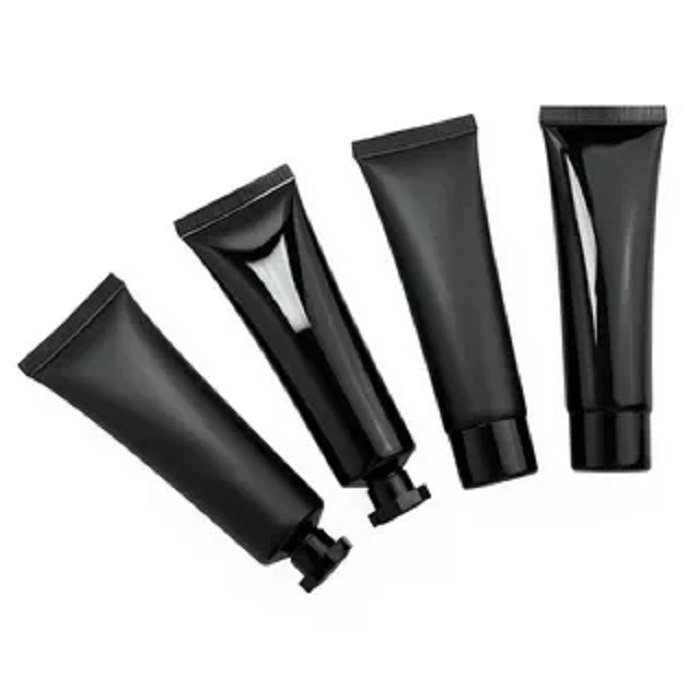
Cosmetic tubes are manufactured from several different materials and multi-layer structures. Although many tubes look similar on a retail shelf, their walls may provide very different levels of flexibility, barrier protection, shape recovery, and recyclability.
The right material depends on the formula, expected shelf life, decoration method, target market, and consumer experience. Understanding the main options helps brands select packaging based on performance rather than appearance alone.
Polyethylene Extrusion Tubes
Polyethylene, commonly abbreviated as PE, is one of the most widely used materials for cosmetic tubes.
PE is lightweight, flexible, chemically resistant, and suitable for many creams, lotions, gels, cleansers, sunscreens, and hair care products.
Two common forms are low-density polyethylene and high-density polyethylene.
LDPE is softer and easier to squeeze. It is frequently used when the formula is thick or the brand wants a flexible package.
HDPE is firmer and provides better shape retention. Manufacturers may combine LDPE and HDPE to create a tube with a controlled level of softness.
PE tubes may be produced as single-layer structures or through co-extrusion, where several material layers are formed together. Multi-layer extrusion can improve barrier performance or support the use of recycled content.
Aluminum Barrier Laminate
Aluminum barrier laminate, or ABL, is made from several bonded layers with thin aluminum foil at the center.
The aluminum layer provides strong protection against oxygen, moisture, light, fragrance loss, and external odors. This makes ABL suitable for sensitive skincare, medicated creams, toothpaste, hair color, ointments, and products requiring long shelf stability.
ABL tubes tend to retain folds after squeezing because the aluminum layer does not return fully to its original shape. This can reduce air intake but creates a more clinical or functional appearance.
The combination of aluminum and plastic can also make ABL more difficult to recycle in conventional systems.
Plastic Barrier Laminate
Plastic barrier laminate, or PBL, also consists of several bonded layers, but it uses a plastic-based barrier rather than aluminum.
EVOH is commonly used to reduce oxygen transmission. PBL generally offers better barrier performance than a standard single-layer PE tube while maintaining a smooth, plastic-like appearance.
PBL tubes recover their shape more effectively than ABL tubes and can support detailed printed graphics.
They are widely used for premium skincare, facial cleansers, hair treatments, oral care, and personal care products where appearance and formula protection are both important.
Actual recyclability depends on the complete material structure and local recycling systems.
Polypropylene Components
Polypropylene is commonly used for tube caps, flip-top closures, and some applicator components.
It has good stiffness, hinge performance, and chemical resistance. A living hinge in a flip-top cap can open and close repeatedly without separate metal parts.
Although the tube body may be PE, the closure is often PP. This combination can affect recycling compatibility, so some sustainability-focused designs use closures that are more closely aligned with the tube body material.
PCR Plastic
Post-consumer recycled plastic is produced from plastic that has been collected, processed, and returned to manufacturing use.
PCR polyethylene can reduce the use of virgin fossil-based material. It is increasingly considered for personal care and skincare packaging.
However, recycled content may affect color, odor, surface consistency, and mechanical properties. The suitable percentage depends on the packaging design and quality requirements.
PCR materials also require reliable sourcing and documentation, especially when environmental claims will be printed on the package.
Bio-Based Polyethylene
Bio-based PE is made partly or fully from renewable raw materials, such as sugarcane.
It has chemical and physical properties similar to conventional polyethylene and can run through many existing production and recycling systems.
Bio-based PE can reduce dependence on fossil raw materials, but it does not automatically make the tube biodegradable or compostable.
Brands should communicate these distinctions accurately to avoid misleading sustainability claims.
Choosing the Right Material
The formula is the starting point for material selection.
Stable products may perform well in standardplastic tubes, while formulas containing sensitive active ingredients, essential oils, strong fragrance, or volatile components may require additional barrier protection.
Material compatibility testing should examine leakage, swelling, discoloration, odor transfer, weight loss, and changes in the formula.
The tube must also suit the filling line, closure, decoration process, and intended use.
PE offers flexibility and broad design options. ABL provides high barrier performance. PBL balances protection with a smoother appearance. PCR and bio-based materials can support specific sustainability goals.
No material is universally best. The correct choice is the structure that protects the product, supports production, and meets the brand’s commercial objectives.